
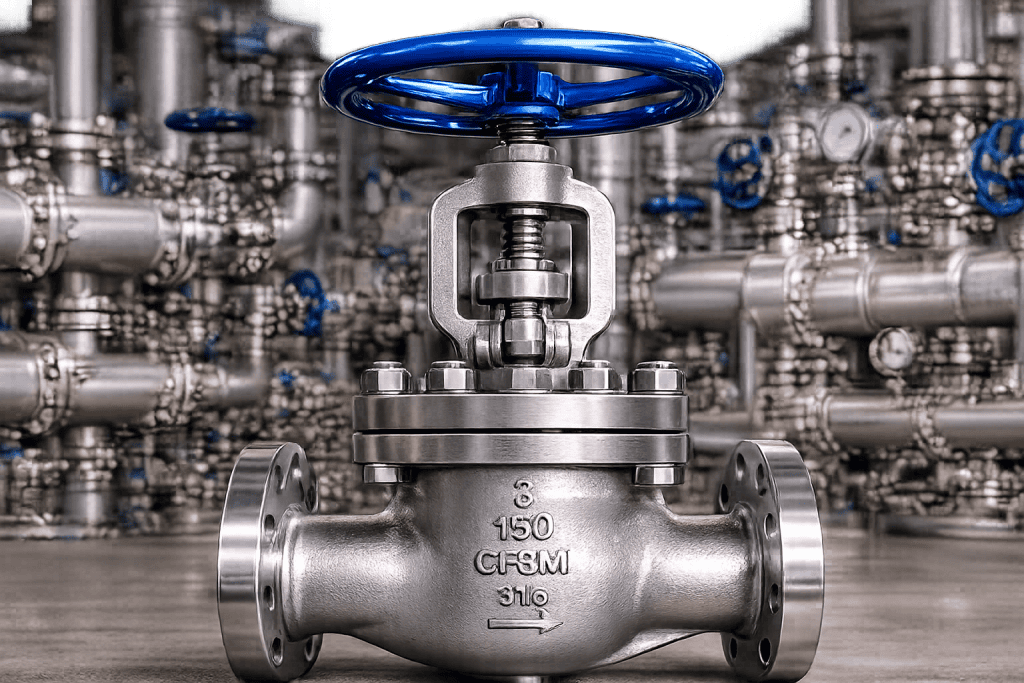
Stainless Steel Globe Valve Manufacturer for Corrosive Service
ZONCIC is a stainless steel globe valve manufacturer supplying SS304, SS316, CF8 and CF8M globe valves for chemical plants, seawater systems, food processing, pharmaceutical production and corrosive industrial pipelines.
Stainless steel globe valves are selected where corrosion resistance, clean service, temperature stability and long service life are important. ZONCIC helps customers choose practical stainless steel globe valve solutions according to media, pressure, temperature and project requirements.

Stainless Steel Globe Valve Manufacturer for Corrosion Resistance
A stainless steel globe valve manufacturer should understand more than valve size and pressure class. In corrosive service, valve life depends on material grade, chemical compatibility, chloride exposure, temperature, sealing surface, stem packing and actual working media.
Stainless steel globe valves are commonly used where carbon steel valves may suffer from corrosion, contamination risk or shortened service life. For chemical processing, seawater handling, clean utility lines and high-purity industrial systems, SS304, SS316, CF8 and CF8M materials may be considered according to the project environment.
ZONCIC supports stainless steel globe valve selection for international industrial projects. We help customers compare corrosion resistance, pressure rating, end connection, trim material and inspection requirements before quotation, reducing the risk of unsuitable valve selection.
Stainless Steel Material Reference
Stainless steel globe valve selection should consider corrosion resistance, chloride environment, oxidation resistance, temperature and chemical compatibility. Customers can review ZONCIC valve standards guidance and stainless steel application information from the Nickel Institute for general material reference.
Key Material Selection Factors for Stainless Steel Globe Valves
SS304 / CF8 Service
Suitable for many clean water, light chemical, food processing and general corrosion-resistant industrial applications.
SS316 / CF8M Service
Often selected where better corrosion resistance is needed, especially for some chloride-containing or chemical process environments.
Media Compatibility
Valve material should be selected according to actual media concentration, temperature, flow condition and corrosion risk.
Clean and Stable Operation
Stainless steel globe valves can support clean service, stable throttling and reliable shut-off in suitable operating conditions.
Stainless Steel Globe Valve Technical Specifications
ZONCIC supplies stainless steel globe valves in different material grades, pressure classes, end connections and trim options. As a stainless steel globe valve manufacturer, we recommend confirming media composition, corrosion level, pressure, temperature, size and inspection requirements before production.
| Valve Type | Stainless Steel Globe Valve |
| Common Material | SS304, SS316, CF8, CF8M or project requirement |
| Service Condition | Corrosive media, clean service, chemical process, seawater-related or high-purity pipeline systems |
| Pressure Rating | Class 150, 300, 600, 900, 1500 or project requirement |
| Trim Material | SS304, SS316, Stellite, hard-faced trim or project requirement |
| End Connection | Flanged, butt weld, socket weld or threaded depending on project requirement |
| Operation | Handwheel, gear operated, electric actuator or pneumatic actuator |
| Testing | API 598 or project inspection requirement |
Stainless Steel Globe Valve Applications
Stainless steel globe valves are commonly used where corrosion resistance, clean service or chemical compatibility is required. ZONCIC can support stainless steel globe valve selection for different industries and working media.
Inspection Control for Stainless Steel Globe Valves
A responsible stainless steel globe valve manufacturer should control material identification, machining quality, sealing performance and surface condition before shipment. For stainless steel valves, material verification and surface protection are especially important to avoid wrong material use and contamination risk.
- Material certificate review according to customer project requirements
- PMI inspection support for stainless steel material verification when required
- Body, bonnet, disc, stem and seat surface inspection before assembly
- Hydrostatic shell test and seat leakage test
- Surface protection, marking confirmation and documentation control
- Export-grade wooden case packing with anti-rust protection
Related Globe Valve and Industrial Valve Solutions
Explore more ZONCIC valve solutions for material selection, pressure class, steam service and industrial flow control requirements.
Stainless Steel Globe Valve FAQ
Why choose a stainless steel globe valve?
Stainless steel globe valves are commonly selected for corrosion resistance, clean service and chemical compatibility where carbon steel valves may not be suitable.
What is the difference between SS304 and SS316 globe valves?
SS316 generally offers better corrosion resistance than SS304 in many chloride-containing or chemical environments. Final selection should depend on media, temperature and project requirements.
What is CF8M material in globe valves?
CF8M is a cast stainless steel material commonly associated with stainless steel valve bodies where corrosion resistance is required in industrial service.
Can stainless steel globe valves be used for seawater?
Stainless steel globe valves may be used in some seawater-related services, but material selection must consider chloride level, temperature, flow condition and corrosion risk.
What information is needed for stainless steel globe valve quotation?
Please provide valve size, pressure class, material grade, media, temperature, end connection, quantity and any special inspection requirements.
Need a Stainless Steel Globe Valve Manufacturer?
Send your valve size, pressure class, stainless steel grade, media, temperature and quantity. ZONCIC will provide a practical stainless steel globe valve solution for your project.
Send Your Inquiry