Why Cheap Globe Valves Fail in Industrial Projects
A low purchase price may look attractive at the quotation stage, but a cheap globe valve can create leakage, downtime, maintenance cost and safety risks in real industrial pipeline service. This guide explains what buyers should check before choosing a globe valve manufacturer.
View WCB Globe Valve Solution
Article Focus
- Why cheap globe valves fail early
- Common quality risks in industrial globe valves
- How to check carbon steel globe valve quality
- What buyers should ask before placing an order
In many industrial projects, valve purchasing is often compared by unit price first. However, for a globe valve used in oil, gas, steam, water, refinery or process pipelines, the lowest quotation is not always the lowest cost. A cheap globe valve may save money at the beginning, but it can lead to leakage, unstable control, repeated maintenance, production shutdown and even safety incidents.
A reliable globe valve manufacturer should not only supply a valve body and handwheel. The manufacturer should understand material selection, pressure rating, machining accuracy, trim material, sealing performance, pressure testing and export packing. These details decide whether an industrial globe valve can work safely for years or fail shortly after installation.
Why Are Some Globe Valves Extremely Cheap?
Cheap globe valves usually become cheap because some important manufacturing steps or materials are reduced. These savings are not always visible from the outside, but they can seriously affect valve performance under pressure and temperature.
Light Body Casting
Some low-cost valves use lighter castings or thinner wall sections. This may reduce weight and price, but it can increase the risk of deformation, leakage and pressure failure.
Lower Grade Trim
Disc, seat and stem materials are critical. If suitable trim material is replaced by cheaper alternatives, the valve may suffer from wear, corrosion or poor sealing.
Weak Testing Control
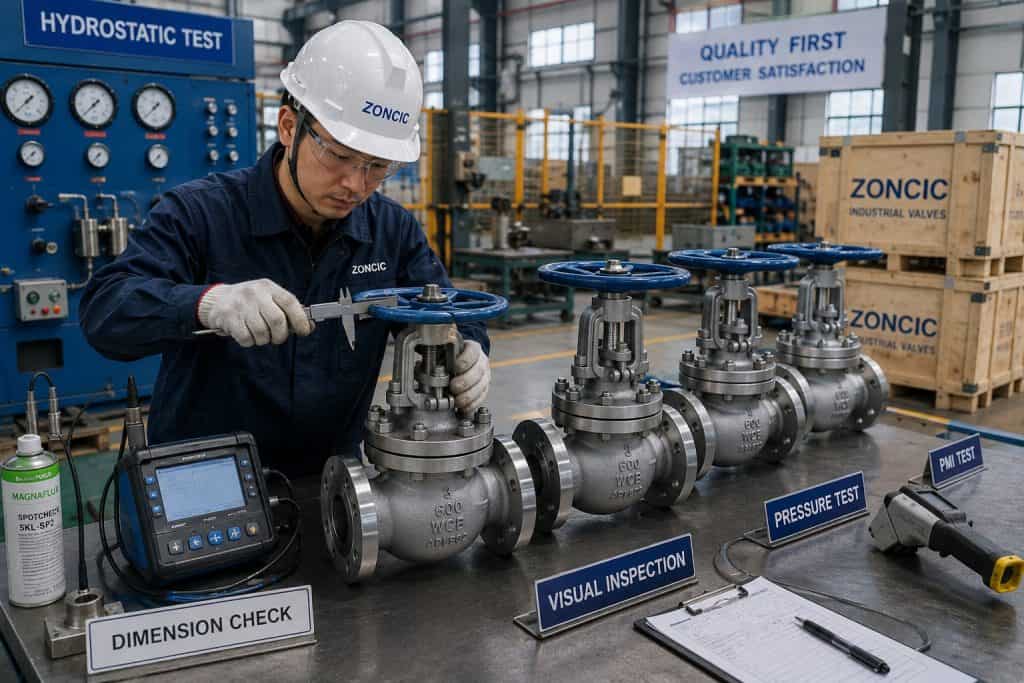
A globe valve that is not properly hydrotested or seat-tested may pass visual inspection but fail after installation in an industrial pipeline.
Common Failure Problems of Cheap Industrial Globe Valves
1. Leakage Around Seat or Body
Leakage is one of the most common problems in a low quality industrial globe valve. Poor seat machining, unsuitable sealing surface material or weak assembly control can cause internal leakage. For steam, oil or chemical service, even small leakage can become a serious operating problem.
2. Stem Bending or Packing Leakage
A globe valve depends on smooth stem movement. If the stem material, machining tolerance or packing structure is poor, the valve may become difficult to operate or leak around the packing area after repeated use.
3. Short Service Life Under Pressure
Cheap globe valves may look similar to standard valves, but real performance appears under pressure, temperature and flow conditions. Thin casting, poor heat treatment or weak sealing design can shorten the valve life significantly.
Buyer Warning
If a supplier only talks about low price but cannot provide material details, pressure testing records, standards, drawings or inspection support, buyers should be careful.
For carbon steel globe valve projects, especially WCB material, buyers should check casting quality, pressure class, seat material, stem material, testing standard and packing method before confirming the order.
Why Carbon Steel Globe Valves Need Strict Quality Control
A carbon steel globe valve is widely used because it offers practical strength, availability and cost efficiency for industrial pipelines. WCB is one of the common cast carbon steel materials for globe valve bodies. But because WCB valves are widely used, they are also commonly affected by price competition.
For buyers, the important question is not only whether the valve is called WCB. The real question is whether the WCB material, casting quality, wall thickness, trim selection and pressure testing can meet the actual working condition.
ZONCIC supplies WCB Globe Valve Manufacturer solutions for oil, gas, steam and industrial pipeline projects, with API/ASME design support, testing control, material traceability and export packing.
How to Choose a Reliable Globe Valve Manufacturer
| What to Check | Why It Matters |
|---|---|
| Material Grade | Body, bonnet, disc, seat and stem materials must match the project medium and temperature. |
| Design Standard | API and ASME standards help buyers evaluate pressure rating, dimensions and industrial suitability. |
| Pressure Test | Hydrostatic shell test and seat leakage test reduce the risk of failure after installation. |
| Inspection Support | PMI, dimensional inspection and third-party inspection help verify valve quality before shipment. |
| Export Packing | Anti-rust protection and wooden case packing reduce damage during international transportation. |
Related Globe Valve Solutions
Need a Reliable Globe Valve Manufacturer?
Send your project requirements including size, pressure class, material, medium and application. ZONCIC can help you choose suitable industrial globe valves for long-term performance.
Request A Quote