How the AI Data Center Boom Is Creating New Demand for Power Plant Valves
AI growth is increasing electricity demand, accelerating power generation projects and changing how EPC contractors procure valves for critical steam, fuel gas, feedwater and cooling systems.
AI is normally discussed in terms of chips, servers and software. Behind this rapid expansion, however, is a less visible industrial challenge: every new data center requires large amounts of stable electricity, dependable cooling and reliable backup generation.
This is accelerating investment in natural gas power plants, distributed generation and upgrades to existing power stations. For valve buyers, EPC contractors and project engineers, the impact is already moving beyond technology headlines and into real equipment procurement.
Data Centers Are Becoming Major Power Consumers
The latest figures from the International Energy Agency show that global data center electricity demand increased by 17% in 2025. Electricity use from AI-focused data centers grew even faster, rising by approximately 50%.
The IEA expects global data center electricity consumption to more than double and reach approximately 945 TWh by 2030. That is slightly more than Japan’s current annual electricity consumption.
The challenge is not limited to total electricity consumption. Data centers are frequently developed in clusters where land, network connections and supporting infrastructure are available. Several large facilities in one region can increase local power demand faster than the grid can add new generation capacity.
Developers and utilities are therefore considering a combination of:
- New combined-cycle gas turbine power plants
- Expansion and modernization of existing power stations
- On-site natural gas generation
- Nuclear and renewable energy integration
- Larger standby and emergency generation systems
- Cooling water and utility infrastructure upgrades
Renewable energy will supply part of this demand, but data centers require continuous and stable electricity. According to the IEA, natural gas is expected to remain one of the main sources used to meet additional power demand through the end of this decade.
Where Will the New Valve Demand Come From?
A data center itself does not use the same quantity of large industrial valves found in a refinery or utility-scale power station. Most of the additional demand comes from the generation, transmission, cooling and utility infrastructure built to support it.
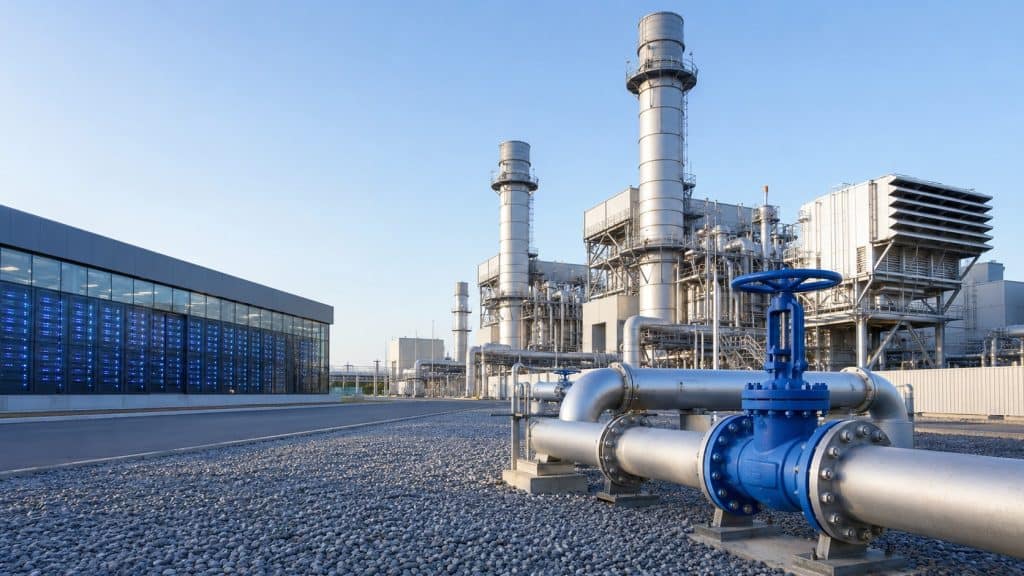
A gas-fired or combined-cycle power plant contains several systems in which valve reliability directly affects availability and safety.
| Power Plant System | Operating Challenge | Typical Valve Requirement |
|---|---|---|
| Natural Gas Supply | Flammable medium and emergency isolation | Tight shut-off ball or gate valves with suitable fire-safe and actuation requirements |
| Main Steam Line | High temperature and high pressure | High-temperature gate valves and pressure seal valve construction |
| Boiler Feedwater | High velocity, erosion and pressure drop | Globe, gate and check valves selected according to isolation or control duty |
| Condensate System | Changing temperature and operating pressure | Reliable sealing and materials suitable for repeated thermal cycling |
| Cooling Water | High flow rate and possible corrosion | Butterfly, gate and check valves with suitable body, disc and seat materials |
| Turbine Bypass | Rapid pressure and temperature changes | Severe-service valves with stable operation during startup and load changes |
| Emergency Shutdown | Fast and dependable isolation | Actuated isolation valves with verified closing time and fail-safe position |
Gate valves, globe valves, ball valves, check valves and butterfly valves may all be used in a power plant, but they are not interchangeable. Selecting a valve only by nominal size and pressure class can lead to poor operating performance.
The medium, design temperature, differential pressure, flow velocity, cycling frequency, installation position and required shut-off performance should be confirmed before the final valve type is selected.
Why Reliability Matters More Than the Initial Price
AI data centers are designed to operate continuously. The generation facilities supporting them face the same expectation. An inexpensive valve can become a costly decision if it creates steam leakage, repeated maintenance or an unplanned shutdown.
Steam Leakage
High-temperature steam can damage packing, gaskets and seating surfaces. Suitable materials, wall thickness, packing design and bolting are required for dependable steam isolation.
Feedwater Erosion
High flow velocity and pressure drop can quickly damage internal components. Isolation valves should not be used for continuous throttling unless their design permits it.
Reverse Flow
A check valve that responds too slowly after a pump trip can contribute to pressure surge and water hammer. Closing behavior must match actual system conditions.
Thermal Cycling
Repeated startup, shutdown and load changes stress valve bodies, bonnets, stems and seals. Material selection must account for cycling, not only maximum temperature.
The correct question is not simply “What is the valve pressure class?” It is “What will this valve experience during startup, full load, shutdown and an emergency?”
Project Buyers Are Asking More Technical Questions
Power plant valve inquiries are becoming more detailed. Buyers increasingly expect suppliers to identify technical risks before production rather than simply quote against a short material list.
Information to confirm before ordering
- Applicable API, ASME or project standard
- Design and operating temperature
- Maximum differential pressure
- Body, trim and seat materials
- Required leakage acceptance criteria
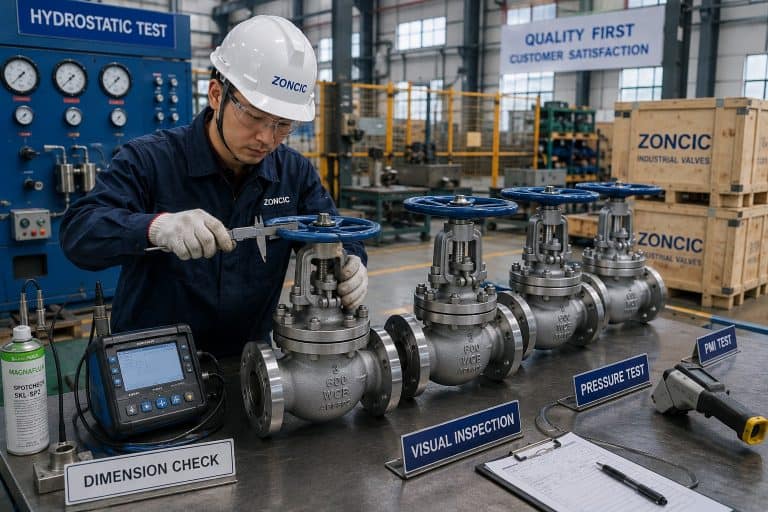
- Hydrostatic and seat test requirements
- Material certificates and traceability
- NDE and third-party inspection scope
- Actuator type and fail-safe position
- Painting, marking and export packaging
API standards cover important valve designs and inspection requirements, including steel gate valves, globe valves, check valves, butterfly valves and valve pressure testing. These standards support consistent procurement, but the standard number alone does not confirm that a valve is suitable for every operating condition.
The project specification, valve data sheet and real service conditions must be reviewed together.
Delivery Time Is Becoming Part of Project Risk
The AI power boom is increasing demand for turbines, transformers, pumps, piping equipment and control systems. When several projects compete for the same manufacturing capacity, procurement schedules become tighter.
Valves may represent a smaller part of the total project value, but delayed valves can still prevent piping completion, hydrostatic testing and system commissioning.
Buyers can reduce this risk by confirming the following points early:
- Final valve quantities, service descriptions and tag numbers
- Required materials, sizes and pressure classes
- Flanged, threaded or butt-weld end connections
- Manual, electric or pneumatic operation
- Inspection and third-party witness requirements
- Drawing, document and approval procedures
- Required delivery sequence for each project system
Clear technical communication at the inquiry stage reduces the risk of specification changes after materials have been purchased or production has already started.
A Real Opportunity, but Not a Simple One
The expansion of AI infrastructure is creating a new source of demand for the power generation sector. It does not mean every standard industrial valve is automatically suitable for a data-center-related power project.
The strongest opportunities will be for manufacturers that understand severe steam service, boiler feedwater conditions, cooling systems, inspection requirements and project documentation. Buyers will also place greater value on suppliers that combine practical engineering communication, consistent production quality and realistic delivery schedules.
The connection between AI and industrial valves may not be obvious at first. But every server requires electricity, every power station depends on fluid control, and every critical piping system depends on valves that operate when required.
For valve manufacturers, EPC contractors and power plant operators, the AI boom is no longer only a technology story. It is becoming an industrial infrastructure story.
Specify the Right Valves Before Production Starts
ZONCIC supplies industrial valves in Class 150–2500, sizes 1/2″–54″, with casting and forged construction, OEM marking, export packaging and typical delivery in 7–30 days.