Why Cheap Industrial Valves Cost More in the Long Run
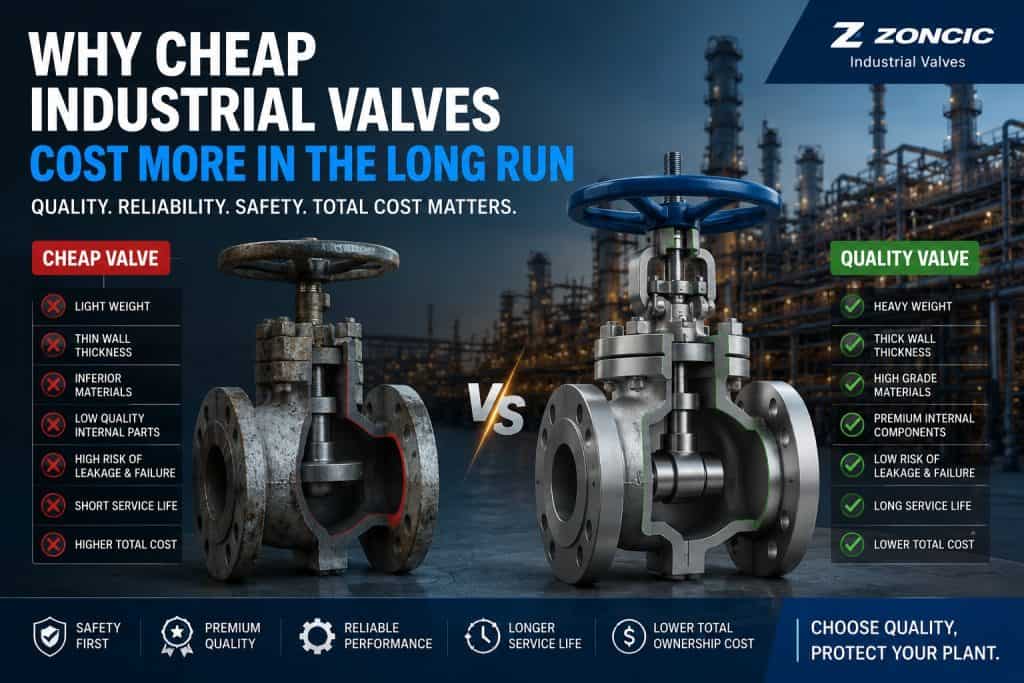
In industrial valve procurement, price is always important. However, choosing cheap industrial valves only by the lowest quotation can create serious risks for oil and gas, petrochemical, steam, power generation and industrial pipeline systems. Valve quality is closely related to body weight, wall thickness, casting quality, internal components, sealing materials and testing standards.
Why Some Industrial Valves Are Much Cheaper
The price difference between industrial valves is not only caused by brand or factory profit. In many cases, very low valve prices are directly related to reduced material weight, lighter valve body molds, thinner wall thickness, lower-grade internal components and simplified testing procedures.
For a valve manufacturer, material cost is one of the largest parts of total production cost. If a valve body is made with a lighter mold, less metal, lower-grade trim or substitute internal parts, the final price can be reduced significantly. However, the hidden cost is transferred to the customer through higher leakage risk, shorter service life and possible system failure.
Valve Weight Is Often a Hidden Quality Indicator
Valve weight is not the only quality standard, but it is an important warning signal. For the same valve size, pressure class and material, a valve that is significantly lighter than normal may indicate reduced wall thickness, lighter casting design or less material in pressure-retaining parts.
In high-pressure, high-temperature or corrosive service, insufficient body strength may increase the risk of deformation, leakage, cracking or failure. This is especially important for gate valves, globe valves, check valves and forged valves used in critical pipeline systems.
Internal Components Decide Valve Performance
Many buyers focus only on the valve body material, but internal components are equally important. Seats, discs, balls, stems, wedges, packing and gaskets directly affect sealing performance, corrosion resistance, operating torque and service life.
Some low-cost valves may use substitute materials for internal components instead of the specified trim material. For example, sealing surfaces may not match the required hardness, corrosion resistance or temperature resistance. This can lead to early leakage, seat damage, stem wear, poor operation and frequent maintenance.
| Valve Part | Quality Concern | Possible Risk |
|---|---|---|
| Body / Bonnet | Lightweight casting or reduced wall thickness | Pressure safety risk, deformation, leakage |
| Seat / Sealing Surface | Low-grade material or poor machining | Internal leakage and short service life |
| Stem | Incorrect material or poor surface finish | Wear, bending, difficult operation |
| Packing / Gasket | Unsuitable sealing material | External leakage under temperature or pressure |
| Bolting | Low-grade fasteners | Joint failure and maintenance risk |
The Real Risk of Cheap Valves in Demanding Applications
Industrial valves are not ordinary hardware products. They are installed in pipeline systems where pressure, temperature, medium compatibility and safety requirements must be considered carefully. In oil and gas, petrochemical, refinery, steam, power plant and chemical applications, valve failure may cause production shutdown, leakage, environmental risk, safety incidents and expensive emergency replacement.
- Unexpected leakage during operation
- Short service life and repeated maintenance
- Unplanned shutdown of pipeline or production system
- Higher labor and replacement cost
- Possible damage to pumps, meters, filters or downstream equipment
- Safety and environmental risks in critical media service
This is why valve selection should not be based on price alone. Buyers should evaluate service conditions first, including medium, pressure, temperature, operation frequency, corrosion risk, installation position and applicable valve standards.
Cheap Price vs Total Cost of Failure
A valve that is 10% or 20% cheaper may look attractive during procurement. But if the valve fails after installation, the real cost may include shutdown loss, replacement labor, transportation, emergency procurement, damaged equipment and project delay.
| Initial Saving | Potential Hidden Cost | Result |
|---|---|---|
| Lower valve price | Shorter service life | More frequent replacement |
| Lightweight valve body | Higher leakage or pressure risk | Possible shutdown or safety issue |
| Low-grade internals | Poor sealing and wear resistance | Maintenance cost increases |
| Reduced inspection | Quality problems found after installation | Project delay and extra cost |
How to Choose the Right Industrial Valve
A professional industrial valve supplier should help customers select valves according to working conditions instead of simply offering the lowest price. Before purchasing industrial valves, customers should confirm the following information:
- Valve type: gate valve, ball valve, globe valve, check valve, butterfly valve or strainer
- Size and pressure class
- Body material and trim material
- Medium, pressure and temperature
- End connection: flanged, threaded, socket weld or butt weld
- Applicable API, ASME, ANSI, DIN or project standard
- Testing and inspection requirements such as API 598, PMI, NDE or hydrostatic test
- Installation environment and operation frequency
For example, a valve used in water service may not require the same material level as a valve used in steam, oil, gas, high-temperature condensate or corrosive chemical service. Correct valve selection must match the real application.
What a Reliable Valve Manufacturer Should Provide
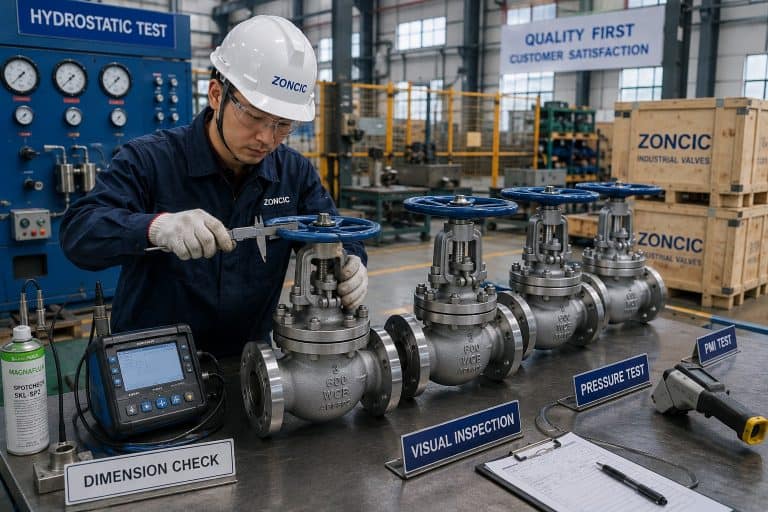
A reliable industrial valve manufacturer should not only provide a quotation, but also help customers understand valve material selection, pressure rating, applicable standards and inspection requirements. Quality control should cover raw material traceability, casting or forging inspection, precision machining, assembly, pressure testing, marking and export packing.
- Clear material specification and valve standard
- Reasonable valve weight and pressure-retaining structure
- Suitable trim material for service conditions
- Hydrostatic shell and seat testing when required
- Dimensional and visual inspection before shipment
- Export-grade packing for sea, land and container shipment
- Technical communication based on drawings or project data
Related Industrial Valve Solutions
ZONCIC supplies industrial valves for oil and gas, petrochemical, power generation, water treatment and industrial pipeline systems. Explore related valve solutions below:
FAQ: Industrial Valve Quality and Price
Are cheap industrial valves always bad?
Not always. However, unusually cheap industrial valves should be checked carefully. Buyers should verify valve weight, material, internal components, pressure class, testing standard and working condition suitability.
Why does valve weight matter?
For the same size, pressure class and material, a much lighter valve may indicate reduced wall thickness or lighter casting design. This may affect pressure safety and long-term reliability.
What internal parts affect valve quality?
Seats, stems, balls, discs, wedges, packing, gaskets and bolting all affect sealing performance, corrosion resistance, operating torque and service life.
How should buyers compare valve quotations?
Buyers should compare not only price, but also material grade, pressure class, valve standard, testing requirement, body weight, trim material, delivery time and supplier technical capability.
Can low-quality valves cause serious losses?
Yes. In demanding industrial applications, valve leakage or failure may cause shutdown, maintenance cost, project delay, safety risk or equipment damage.