Hydrogen Valve Technology for Future Energy Systems
Hydrogen energy is becoming one of the fastest-growing sectors in modern industrial and clean energy infrastructure. As hydrogen production, transportation, storage, and refueling systems continue to expand, hydrogen valve technology is receiving more attention from engineers, EPC contractors, and industrial users worldwide.
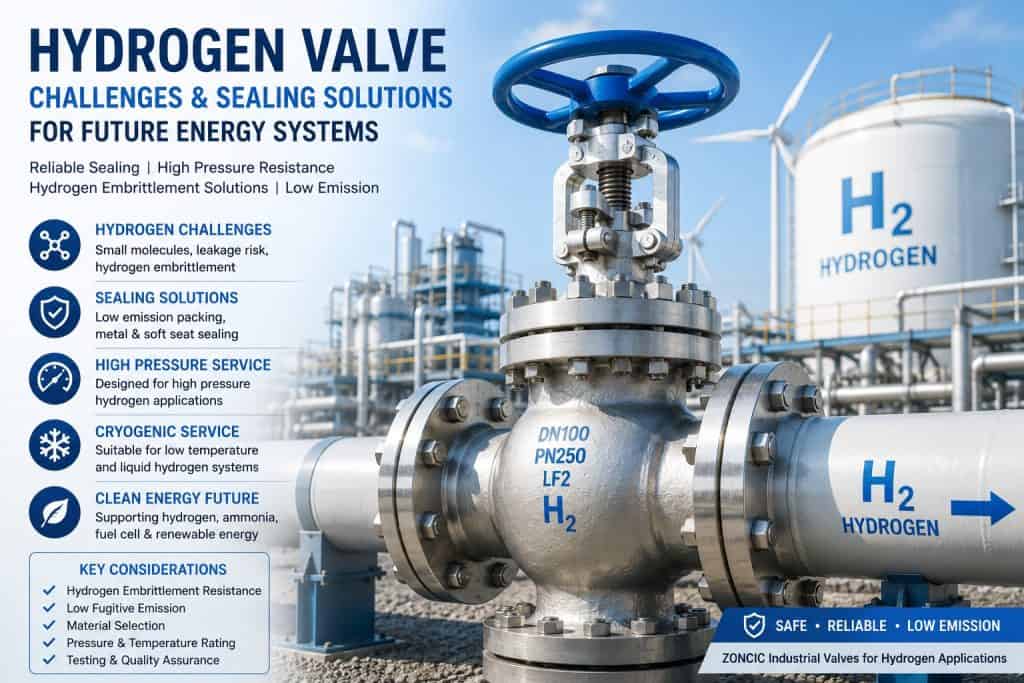
Compared with conventional industrial applications, hydrogen service creates unique technical challenges for industrial valves. Hydrogen molecules are extremely small, which increases leakage risk. In addition, hydrogen embrittlement, high pressure operation, cryogenic service, and strict sealing requirements make hydrogen valve selection more demanding than ordinary pipeline systems.
Why Hydrogen Valve Applications Are Different
Hydrogen systems require higher sealing performance because hydrogen molecules can escape through small gaps more easily than many other gases. Valve stem packing, body-bonnet sealing, seat leakage performance, and material compatibility become especially important for hydrogen applications.
Hydrogen may also affect metallic materials under certain operating conditions. Hydrogen embrittlement can reduce ductility and increase the risk of cracking in some materials. Because of this, hydrogen valve projects often require careful evaluation of body materials, trim materials, bolting systems, stem design, sealing performance, and testing standards.
Main Challenges for Hydrogen Valve Systems
- Hydrogen leakage caused by extremely small hydrogen molecules
- Hydrogen embrittlement risk for some metallic materials
- High pressure operating conditions in pipeline systems
- Cryogenic service requirements for liquid hydrogen applications
- Strict fugitive emission and low leakage standards
- Fire-safe and anti-static valve design requirements
These challenges require hydrogen valve systems to use reliable sealing structures, suitable materials, precision machining, and proper inspection procedures. Compared with general industrial valves, hydrogen valves often require stricter quality control and testing standards.
How Hydrogen Leakage Affects Valve Design
One of the biggest technical concerns for hydrogen valve systems is leakage control. Since hydrogen molecules are extremely small, valves used in hydrogen pipelines and storage systems must provide reliable stem sealing and seat sealing performance.
Low leakage packing systems, precision-machined sealing surfaces, and high-quality stem finishing are important for reducing hydrogen leakage risk. In many hydrogen applications, valve manufacturers also focus on fugitive emission control to improve environmental and operational safety.
Valve Types Used for Hydrogen Service
Several industrial valve types can be used in hydrogen systems depending on pressure, temperature, media condition, and shut-off requirements.
- Ball valves for tight shut-off and pipeline isolation
- Gate valves for full open and full close isolation service
- Globe valves for throttling and flow regulation
- Check valves for reverse flow prevention
- Triple offset butterfly valves for low leakage gas applications
Trunnion mounted ball valves are commonly selected for large hydrogen pipeline systems because they provide stable sealing performance under high pressure operating conditions.
Hydrogen Embrittlement and Material Selection
Hydrogen embrittlement may affect some metallic materials under high pressure and cyclic loading conditions. Proper material selection is important to reduce the risk of cracking, mechanical degradation, or long-term sealing failure.
For this reason, hydrogen valve projects often specify material testing, hardness control, PMI inspection, and material traceability requirements. Stainless steel, alloy steel, and specially selected low-temperature materials are commonly considered for hydrogen applications depending on service conditions.
Sealing Technology for Hydrogen Valves
Sealing performance is one of the most important factors in hydrogen valve design. Both internal leakage and external leakage must be carefully controlled to improve system safety and reliability.
Stem Packing Sealing
Valve stem packing systems are critical for fugitive emission control. Low emission graphite packing, live-loaded packing systems, and improved stem surface finishing can help reduce hydrogen leakage risk.
Body-Bonnet Sealing
The body-bonnet connection must maintain sealing performance under pressure and temperature fluctuations. Depending on valve type and pressure class, spiral wound gaskets, RTJ gaskets, or other sealing structures may be used.
Seat Sealing Performance
Seat sealing requirements depend on operating pressure, media condition, and shut-off class requirements. Soft seated valves may provide tight shut-off for some hydrogen applications, while metal seated valves may be preferred for severe service and high temperature conditions.
Applications of Hydrogen Valve Systems
Hydrogen valve systems are used in a wide range of industrial and clean energy applications. As hydrogen infrastructure expands globally, demand for reliable industrial valve solutions is expected to increase significantly.
- Hydrogen production plants
- Hydrogen pipeline transportation systems
- Hydrogen storage facilities
- Hydrogen refueling stations
- Fuel cell systems
- Green ammonia projects
- Renewable energy storage systems
Hydrogen pipeline projects, fuel cell systems, and renewable energy infrastructure all require stable and reliable industrial valve performance for long-term operation.
Important Standards for Hydrogen Valve Projects
Hydrogen valve projects may refer to several international standards depending on application and project specification. Valve manufacturers and EPC contractors often evaluate requirements related to leakage performance, pressure testing, materials, and hydrogen pipeline systems.
- API standards for industrial valves and pipelines
- ASME pressure piping requirements
- ISO standards related to industrial valve testing
- API 6D Annex M for hydrogen pipeline valve applications
- ISO 15848 for fugitive emission testing
- ASME B31.12 for hydrogen piping systems
Manufacturing and Quality Control
Reliable hydrogen valve performance depends on strong manufacturing quality, material control, precision machining, and proper testing procedures. Hydrogen applications often require stricter inspection requirements than general industrial valve service.
ZONCIC focuses on supplying industrial valve solutions for demanding pipeline applications. Valve products are manufactured with attention to material traceability, pressure testing, leakage testing, machining accuracy, and export packing quality.
- Hydrostatic shell and seat testing before shipment
- Material inspection and PMI testing support
- Low leakage sealing solutions
- WCB, stainless steel, alloy steel, and forged steel materials
- API, ASME, DIN, EN, JIS, and GOST valve options
- Export wooden case packing with clear valve marking
Choosing the Right Supplier
When selecting hydrogen valve suppliers, buyers should evaluate manufacturing capability, sealing performance, testing standards, engineering support, export experience, and project references. Reliable technical support is especially important for hydrogen infrastructure projects because valve performance directly affects operational safety.
ZONCIC supplies industrial valves for oil & gas, petrochemical, power generation, water treatment, and industrial pipeline systems worldwide. Our product range includes gate valves, ball valves, globe valves, check valves, butterfly valves, and industrial valve solutions for demanding applications.
Conclusion
Hydrogen valve technology is becoming increasingly important as hydrogen energy infrastructure continues to expand. Reliable sealing performance, proper material selection, pressure resistance, and leakage control are critical for safe and stable hydrogen pipeline operation.
To learn more about industrial valve solutions, visit our industrial valves page. For additional technical information, you can also refer to API, ASME, and ISO valve standards.
Need Industrial Valve Solutions for Hydrogen Projects?
Contact ZONCIC for gate valves, ball valves, globe valves, check valves, butterfly valves, and industrial pipeline valve solutions for hydrogen and clean energy applications.