Introduction
Gate valves are one of the most widely used industrial valves in pipeline systems. They are designed for full open or full close service, making them essential in industries such as oil and gas, petrochemical, power generation, and water treatment. Choosing the right gate valve is critical to ensure system reliability, safety, and long-term performance.
In this guide, we will explain how to choose the right gate valve based on working conditions, material selection, pressure ratings, and real industrial applications.
What is a Gate Valve
A gate valve is a linear motion valve used to start or stop the flow of fluid. It works by lifting a gate or wedge out of the flow path. When fully open, gate valves provide minimal resistance and pressure drop, making them ideal for pipeline systems that require unrestricted flow.
Gate valves are not suitable for throttling applications, as partial opening may cause vibration, erosion, and damage to sealing surfaces.
Main Types of Gate Valves
There are several types of gate valves used in industrial systems:
- Wedge Gate Valve: The most common type, suitable for high-pressure applications.
- Parallel Slide Gate Valve: Used in low-pressure and low-temperature systems.
- Knife Gate Valve: Designed for slurry and viscous media.
- Pressure Seal Gate Valve: Suitable for high-temperature and high-pressure environments.
Gate Valve vs Ball Valve
When selecting valves, many engineers compare gate valves with ball valves.
- Gate Valve: Best for on/off control, low pressure drop, large pipelines.
- Ball Valve: Fast operation, better sealing, suitable for frequent use.
For applications requiring full flow and minimal restriction, gate valves are usually preferred.
Key Factors When Choosing a Gate Valve
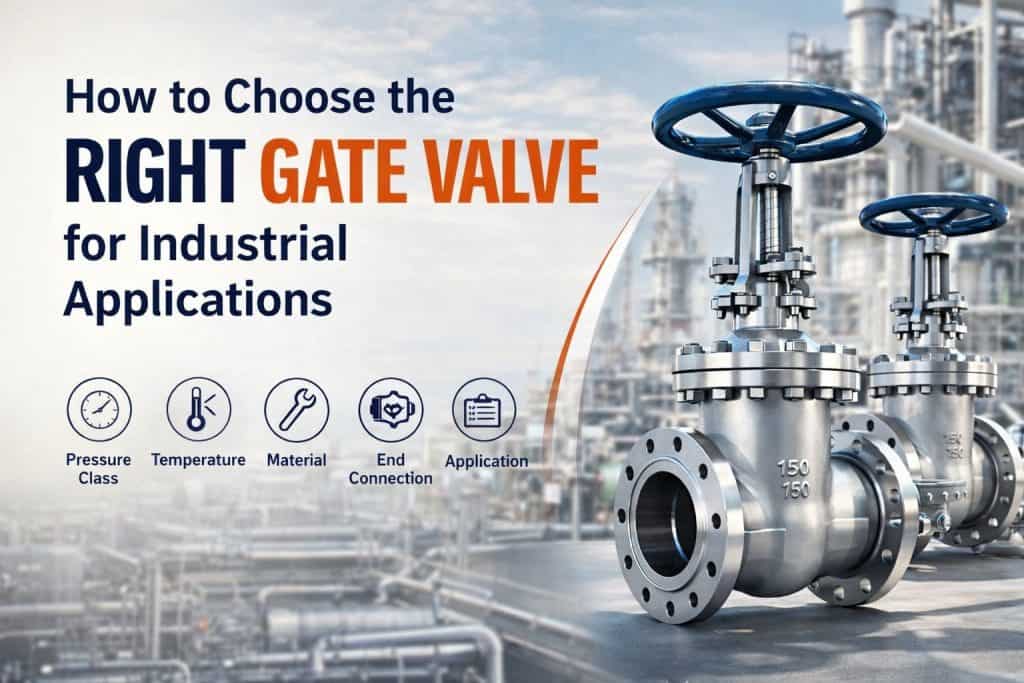
1. Pressure Rating
Select the valve based on system pressure. Common standards include Class 150, 300, 600, 900, 1500, and 2500.
2. Temperature Range
High-temperature applications require special materials such as alloy steel or stainless steel.
3. Material Selection
- WCB (Carbon Steel): General industrial use
- CF8 / CF8M (Stainless Steel): Corrosion resistance
- Forged Steel: High pressure and high temperature
4. End Connection
- Flanged
- Butt Weld
- Threaded
5. Operation Type
- Manual (Handwheel)
- Electric Actuated
- Pneumatic Actuated
Industrial Applications of Gate Valves
Gate valves are widely used in various industries:
- Oil and Gas Pipelines
- Petrochemical Plants
- Power Generation Facilities
- Water Treatment Systems
- Refineries and Chemical Processing Plants
For high-pressure pipeline systems, API 600 gate valves are commonly used due to their reliability and performance.
Learn more about our Gate Valve solutions for industrial applications.
Common Mistakes to Avoid
- Using gate valves for throttling
- Selecting incorrect pressure class
- Ignoring corrosion resistance
- Choosing wrong connection type
A proper valve selection ensures long-term performance and reduces maintenance costs.
Conclusion
Choosing the right gate valve involves understanding your system requirements, including pressure, temperature, material compatibility, and application environment. A well-selected gate valve improves efficiency, reduces downtime, and ensures safe operation.
Frequently Asked Questions (FAQ)
What is the main function of a gate valve?
A gate valve is used for full open or full close operation in pipeline systems.
Can gate valves be used for flow control?
No, gate valves are not suitable for throttling as it may damage sealing surfaces.
What industries use gate valves?
They are widely used in oil & gas, petrochemical, power plants, and water treatment systems.
What material is best for gate valves?
It depends on the application. WCB is common, while stainless steel is used for corrosive environments.
What is API 600?
API 600 is a standard for steel gate valves used in high-pressure industrial applications.